Earthing Rod Types, Sizes and Prices in India: Copper Bonded vs GI vs Pure Copper

Barbed Wire Fencing Cost and Design: Strands, Post Spacing and IS 278 Wire Gauge
September 17, 2026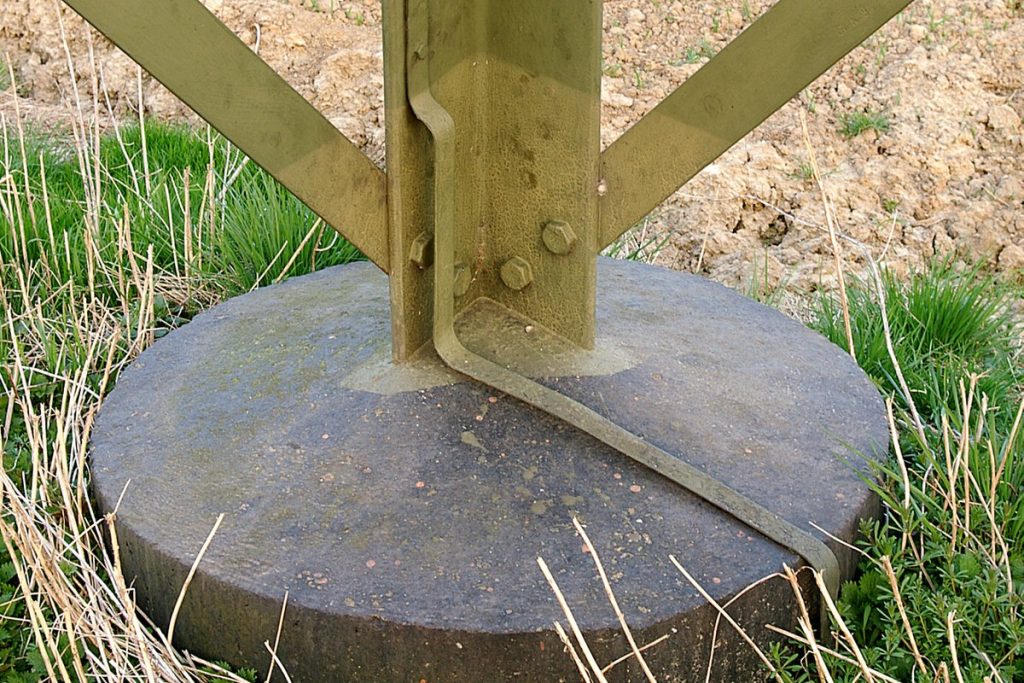
An earthing rod is a metal rod driven into the ground so that fault current and lightning current have a low-resistance path into the earth. In India you will be quoted three rod types: copper bonded steel, galvanized iron (GI) and pure copper. The right choice depends on your soil, the fault level and how long the installation must last without maintenance. This guide gives the sizes Indian standards call for, an application-by-application selection table, what each type costs in 2026, and what to check on a datasheet before you order.
What is an earthing rod and what does it do?
An earthing rod (also called an earth rod, ground rod or rod electrode) is a vertical electrode that connects the earthing conductor of an installation to the general mass of earth. Its job is to give fault current, leakage current and lightning current a low-resistance path into the ground. That path lets protective devices trip and keeps touch voltages within safe limits.
Rods are the most common electrode shape because a long, thin electrode dissipates current better than a plate of the same surface area. IS 3043, the Indian code of practice for earthing, explains why. Most of the voltage drop happens in the soil close to the electrode surface. An electrode that is long in one direction and small in the other two therefore spreads current into the ground more efficiently than a flat plate (IS 3043:1987, clause 9.1). A rod is also the only electrode type that can be driven deeper when the first metre of soil is dry or rocky.
Which types of earthing rods are used in India?
Three rod materials cover almost every Indian project: copper bonded steel rods, galvanized iron rods and pipe electrodes, and solid pure copper rods. A fourth category, the chemical or maintenance-free electrode, is usually a copper bonded or GI pipe electrode supplied with a conductive back-fill compound rather than a different rod material.
| Rod type | Construction | Strengths | Limitations | Typical use |
|---|---|---|---|---|
| Copper bonded steel | Low-carbon steel core with electrolytic copper molecularly bonded to it, 100 or 250 micron coating | Conductivity close to copper at the surface, steel core takes driving force, long life, lower cost than solid copper | Thin 100 micron coatings wear through in aggressive soil; coating must be measured, not assumed | Substations, towers, solar plants, commercial buildings, telecom sites |
| Galvanized iron (GI) rod or pipe | Mild steel rod or pipe with hot-dip zinc coating | Lowest cost, easy to weld and clamp, widely stocked | Zinc is sacrificial, so life is shorter in wet or saline soil; higher resistance than copper | Transmission tower pipe earthing, budget installations, dry inland soils |
| Pure copper | Solid electrolytic copper rod or bar | Best conductivity and corrosion resistance, very long life | Highest price, soft rod bends when driven deep, theft risk | High fault-current substations, corrosive soils, lightning protection where life matters more than cost |
| Chemical (back-fill) electrode | Copper bonded or GI pipe electrode packed in a conductive, moisture-retaining compound | Stable resistance through dry seasons, no salt and charcoal top-ups | Compound quality varies widely between suppliers; larger pit | Solar plants, data and telecom sites, rocky or dry ground |
Stainless steel rods exist for coastal and galvanic-corrosion situations, but they are rare in Indian tenders and cost more than copper bonded rods, so they are left out of the comparison above.
What sizes do earthing rods come in?
Indian practice starts from the minimum electrode sizes in IS 3043 and then selects a market size above them. The code sets a minimum length of 2.5 m for rod and pipe electrodes. The minimum diameter is 12.5 mm for a copper rod, 16 mm for a GI rod and 38 mm for a GI pipe electrode. Parallel electrodes must be spaced at least twice their length apart (IS 3043:1987, Table 9 and clause 20.2).
For copper bonded rods, the international component standard used by most Indian manufacturers is IEC 62561-2. The standard requires a 14 mm rod to carry a radial copper coating of at least 250 microns of 99.9 percent copper. A lighter 70 micron coating is allowed only on rods used as conductors, not as driven earth electrodes (IEC 62561-2:2018, Table 2 and clause 4.4). The practical meaning for buyers is that “100 micron” rods, which are common in Indian price lists, do not meet the IEC electrode requirement even though they are cheaper.
| Rod type | Common Indian market sizes | Standard minimum | Coating |
|---|---|---|---|
| Copper bonded rod | 14.2, 16, 17.2, 20 and 25 mm diameter; 1, 1.2, 1.5, 2 and 3 m lengths, extendable with threaded couplers | 12.5 mm copper rod, 2.5 m length (IS 3043) | 100 or 250 micron copper; 250 micron meets IEC 62561-2 |
| GI rod | 16, 20 and 25 mm diameter; 2.5 and 3 m | 16 mm diameter, 2.5 m (IS 3043) | Hot-dip galvanized |
| GI pipe electrode | 40, 50, 60, 80 and 100 mm outer diameter; 1, 2 and 3 m; pipe-in-pipe or strip-in-pipe designs | 38 mm GI pipe, 2.5 m (IS 3043) | Hot-dip galvanized |
| Pure copper rod | 12.5, 16 and 20 mm solid rod; 50 and 80 mm copper pipe electrodes; 1 to 3 m | 12.5 mm, 2.5 m (IS 3043) | None needed |
A single 3 m rod is the default for most sites. Resistance falls quickly over the first two to three metres of depth and more slowly after that, so IS 3043 recommends driving deeper only when the upper soil is poor. Where one rod cannot reach the target resistance, two or more rods spaced at twice their length are used, or the rod is coupled and driven further.
Earthing rod selection by application
The table below is the selection guide VLI uses when a buyer sends a one-line enquiry such as “earthing rod for 2 MW solar plant” or “earthing for 132 kV tower”. Each row gives a rod type, a size and the reason for the choice. Where a project specification already names the electrode, the specification wins.
| Application | Recommended rod | Size to quote | Why |
|---|---|---|---|
| House or small commercial LT installation | Copper bonded rod, or GI pipe electrode where cost matters | 14.2 or 16 mm x 3 m copper bonded, 250 micron; or 40 mm x 3 m GI pipe electrode with back-fill | Meets IS 3043 minimums with one pit; copper bonded lasts longer in wet ground |
| Rooftop and ground-mounted solar | Copper bonded rod with back-fill compound | 17.2 mm x 3 m, 250 micron, one per array earthing point and per lightning arrester | Inverter manufacturers ask for low, stable resistance; back-fill keeps it stable in dry seasons |
| Transmission line tower | GI pipe electrode, or counterpoise where footing resistance stays high | 25 mm x 3 m GI pipe per PGCIL practice; multiple pipes if footing resistance exceeds 10 ohms | Utility specifications call for GI pipe earthing at the leg; copper is not used because of theft and cost |
| Substation earth mat riser and equipment earthing | Copper bonded rod at the mat, GI strip risers | 17.2 or 20 mm x 3 m copper bonded, 250 micron, at mat corners and equipment points | High fault current and a design target of 1 ohm or lower for the grid |
| Telecom tower, data room, lightning protection | Copper bonded rod, or pure copper where the soil is corrosive | 17.2 mm x 3 m copper bonded, 250 micron; 20 mm pure copper in saline or acidic soil | Lightning earthing needs the lowest impedance path and a long maintenance-free life |
| Industrial plant with high fault level or corrosive ground | Pure copper rod or copper pipe electrode | 20 mm solid copper x 3 m, or 50 mm copper pipe electrode | Copper does not depend on a coating, so life is not limited by wear-through |
Two rules apply across every row. First, measure soil resistivity before finalising the number of rods, because a 3 m rod in wet clay and the same rod in dry sand give very different results. Second, never mix a copper electrode and a GI strip in the same pit without a bimetallic connector, because the two metals corrode each other at the joint. For the electrode choice between rod, pipe and strip on a given site, see VLI’s earthing materials range.
How much does an earthing rod cost in India?
In September 2026 a copper bonded earthing rod costs roughly 400 to 700 rupees for a 1 m rod, and 1,000 to 2,000 rupees for a 3 m rod in the 14 to 17 mm sizes. GI pipe electrodes and chemical electrodes with back-fill sit between about 1,500 and 3,500 rupees per 3 m unit. Solid copper electrodes run from about 3,000 rupees for a 1 m unit to well above 6,000 rupees for larger sizes. These are indicative market bands taken from published Indian seller listings in September 2026, not VLI’s quotation. Actual pricing moves with copper and zinc prices, coating thickness and your order quantity.
| Rod type and size | Indicative band per piece (INR, Sept 2026) | What moves the price |
|---|---|---|
| Copper bonded rod, 14 to 16 mm x 1 m | 400 to 700 | Coating thickness (100 vs 250 micron), pointed or threaded end |
| Copper bonded rod, 14 to 17 mm x 3 m | 1,000 to 2,000 | Coating thickness, whether back-fill compound is bundled |
| Copper bonded rod, 20 to 25 mm x 3 m | 2,000 to 3,000 | Steel core diameter, copper weight |
| GI pipe electrode, 40 to 60 mm x 3 m, with back-fill | 1,500 to 3,500 | Pipe wall thickness, pipe-in-pipe versus strip-in-pipe design |
| Chemical electrode, 48 to 58 mm x 1 to 3 m, copper bonded, with compound | 1,700 to 2,500 | Compound quantity and grade, terminal size |
| Pure copper electrode, 50 mm x 1 m | 3,000 to 6,000 | Copper purity and wall thickness; copper price index |
Three cost items sit outside the rod price and are often left out of comparisons. The first is the earth pit chamber and cover. The second is the back-fill compound, typically 25 kg per rod for a chemical electrode. The third is installation, which includes boring, clamping the conductor and a resistance test. A cheap rod with a thin coating that has to be replaced in five years costs more than a 250 micron rod that lasts the life of the installation. For a project quotation by size and quantity, use VLI’s earthing rod page.
Which earthing rod is best?
For most Indian installations the best choice is a copper bonded steel rod with a 250 micron copper coating, driven to 3 m. Add a conductive back-fill compound where the soil dries out. Copper bonded rods give near-copper conductivity at the surface, a steel core strong enough to drive, and a life measured in decades, at a fraction of the price of solid copper.
Pure copper becomes the best choice when the soil is corrosive (coastal, saline or acidic) or when fault currents are very high. It also suits owners who want the longest maintenance-free life and can protect the rod from theft. GI is the right answer when the specification calls for it, as it does for transmission tower pipe earthing. It is also the answer when the site is dry inland soil and your budget cannot stretch to copper bonded rods. In that case, plan for periodic resistance checks, because the zinc coating is sacrificial.
The wrong answer is a 100 micron copper bonded rod sold as equivalent to a 250 micron one. The thinner coating is not an IEC 62561-2 electrode and will wear through sooner in wet ground; it is acceptable only where the purchaser knowingly accepts a shorter life.
Can you install an earthing rod yourself?
For a house or small shop, a competent electrician can install a single rod electrode in a day. For substations, towers, solar plants and any high-voltage installation, the project contractor designs and installs the earthing and tests it before energisation. Rules and inspections under the Central Electricity Authority safety regulations apply to the HV cases, and the earth resistance must be recorded and kept.
The steps for a single rod are the same whether an electrician or a contractor does the work. Choose a spot that stays damp and is at least 1.5 m from the building foundation. Bore or drive the rod to its full length. Keep the top of the rod inside an earth pit chamber, so the connection stays visible for inspection as IS 3043 requires. Clamp the earthing conductor with a matching-metal clamp. Back-fill with compound or with the salt and charcoal layers the code describes. Finally, measure the resistance with an earth tester. If a second rod is needed, place it at least twice the rod length away from the first, which for 3 m rods means a 6 m spacing (IS 3043:1987, clause 20.2).
What to check on an earthing rod datasheet before you buy
Most earthing rod problems trace back to a datasheet that was never read. Ask the supplier for the following and compare them line by line with the tender or design specification.
- Coating thickness, measured. Ask for the microns as a measured value using a magnetic coating gauge, the method IEC 62561-2 specifies, not a marketing figure.
- Copper purity and bonding method. The copper should be 99.9 percent electrolytic copper and molecularly bonded to the steel, so it does not peel when the rod is driven.
- Core diameter and length tolerance. A “16 mm” rod should be 16 mm over the steel plus the coating, with the tolerance stated.
- Threads and couplers. For rods that will be extended, the thread should be rolled after coating so the copper is not cut away, and the coupler metal should match the rod.
- Test certificate. A mill test certificate for the steel and a coating test report for the copper or zinc. For GI, ask for the zinc mass per square metre.
- Back-fill compound. The bag weight per rod and the compound’s resistivity, if a chemical electrode is being sold.
- Standard referenced. IS 3043 for the installation, IEC 62561-2 or the equivalent for the rod itself.
VLI supplies copper bonded rods, GI pipe electrodes and copper clad earthing sets with these documents. We can also supply the GI strip, earthing flat and cleat clamps that connect the rod to the structure.
Frequently asked questions
How long should an earthing rod be?
At least 2.5 m for a rod or pipe electrode under IS 3043, and 3 m is the usual market length in India. Resistance falls fastest over the first two to three metres, so a 3 m rod gives most of the benefit. Where the target is not met, couple a second rod and drive deeper, or add a second pit at twice the rod length away.
What is the difference between copper bonded and copper clad rods?
Both are steel rods with a copper outer layer. In a copper bonded rod the copper is electroplated so that it is molecularly bonded to the steel; in a copper clad rod a copper sleeve is mechanically fixed over the steel. Bonded copper does not slip or tear when the rod is driven, which is why standards and most specifications call for the bonded type.
Is 100 micron or 250 micron copper coating better?
250 micron. IEC 62561-2 requires a minimum 250 micron radial copper coating on copper coated steel earth rods used as driven electrodes. A 100 micron rod costs less but has less than half the copper to resist corrosion, so it wears through sooner in damp or aggressive soil.
How many earthing rods does a house need?
One rod electrode is usually sufficient for a house if it reaches the resistance the local supply authority requires. Many utilities ask for two separate earth connections for the installation, each with its own electrode. Where one rod cannot meet the target, add a second rod spaced at least twice the rod length away.
What earth resistance should an earthing rod achieve?
The target depends on the installation, not the rod. IS 3043 gives a guide value of 10 ohms for the footing resistance of an overhead line tower. Substations need much lower values, and the grid is designed for 1 ohm or less. For a building installation the resistance must be low enough for the protective device to operate, which the electrician confirms with an earth loop test.
Can a GI rod be used instead of copper bonded?
Yes, where the specification allows it and the soil is not aggressive. GI electrodes are standard for transmission tower pipe earthing and are the lowest-cost option. Their zinc coating is sacrificial, so plan for resistance checks and eventual replacement in wet or saline ground.
Cover photo: transmission tower foundation with earthing strip, by Rainer Knäpper, via Wikimedia Commons, Free Art License / CC BY-SA 2.0 DE, cropped.